The Bin Behind the Bin: Unfiling Autechre in UK Record Shops
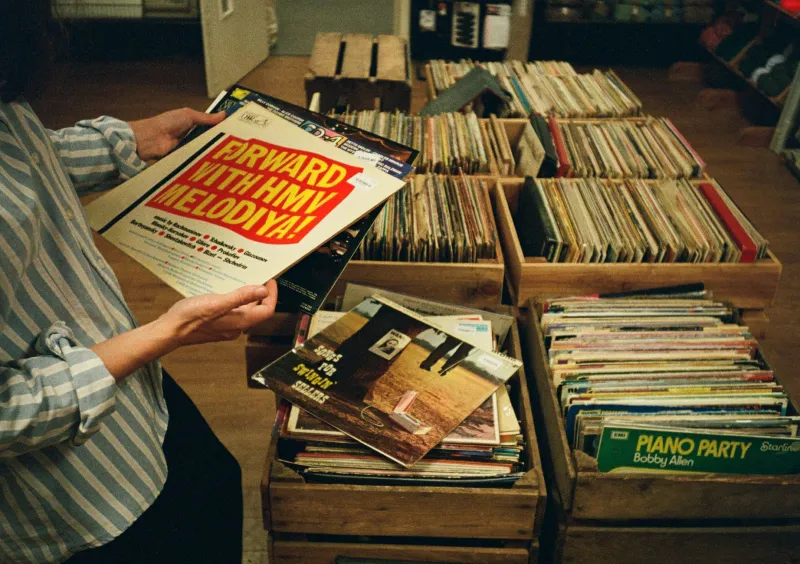
There's a particular sound a record shop makes when someone gives up. A crate gets pushed back, a divider clacks into place, and a punter drifts towards the till empty-handed. I've made that sound myself, more than once, while hunting for Autechre in a shop that definitely had Autechre in it. Somewhere. Probably behind the jazz reissues, filed under a word nobody has said out loud since 1997.
This isn't a moan about shop staff. It's a moan about taxonomy. Autechre are one of the great British electronic acts, on Warp since the early nineties, with a catalogue that runs from ambient-leaning early work to the rhythmically feral later records. And yet in the average UK second-hand shop, they're scattered across four different sections like a band that got burgled mid-tour.
The trouble with 'electronica'
'Electronica' is the bin where good intentions go to die. It's a term that once meant something — roughly, dance music you'd listen to at home, in a big coat — and now functions as a holding pen for anything with a synth on it that isn't obviously house or obviously a band. In one Bristol shop I know, that section held Autechre, Boards of Canada, Aphex Twin, a stray Orb compilation, three ambient techno twelve-inches, a Portishead remix LP and a CD of whale song. Sorted by nothing in particular.
The practical effect is burial. A curious listener who has just read about Incunabula or heard 'Amber' on a friend's speakers will not think 'I'll try electronica'. They'll think 'A', or they'll think 'Warp', or they'll ask the person behind the counter. If the answer involves a vague wave towards a shelf near the window, you've lost them.
'IDM' is worse. I've made my peace with the term as historical shorthand, but as a filing system it's a scrapyard. It tells the browser almost nothing, it dates everything to a specific magazine moment, and in 2026 it's a word most people under thirty would read as a typo. Same story with 'experimental', which in practice means 'we didn't know where else to put it' and tends to be adjacent to the noise records, which is a completely different audience.
Four bins, one artist
Here's the audit. In an average UK shop with a decent electronic section, you can reasonably expect to find Autechre in up to four places, none of them wrong, all of them unhelpful together.
- Under A, in a general popular music run, because someone once decided alphabetical is neutral and applied it to everything.
- Under W for Warp, in shops that file labels as a courtesy. Great for crate-diggers, terrible for anyone who doesn't already know the discography.
- In the electronic/IDM/experimental tangle, usually spine-out, often unpriced, frequently missing the sleeve.
- In the new arrivals or 'staff picks', which is the only place they're visible and also the place they vanish from fastest.
Add the format problem on top and it gets sillier. Vinyl reissues, original nineties pressings, CD editions, the long-form boxed sets and the sprawling digital-era releases don't all sit together, because the shop may file CDs in a completely separate room. I once found Confield on CD in a plastic tub marked 'MISC' by a till in Leeds, which felt less like filing and more like a hostage situation.
A scheme that would actually work
If I ran a shop — and I have been politely asked to stop suggesting this to staff — I'd do three things.
First, file Autechre under A, together, in one block, and cross-reference. One divider, all formats where possible, and a little handwritten card in the electronic section saying 'Autechre — see A'. That single card does more for discovery than any amount of genre words.
Second, file the adjacent acts near them. Gescom, Lego Feet, the remix work, the split releases — these belong in the orbit of the main run, not scattered. If someone likes Tri Repetae they should be able to trip over the related material without a database.
Third, retire 'IDM' as a primary divider in favour of something a human might search for. 'Warp and UK electronic' works. So does 'ambient and experimental techno'. Genre precision matters less than a signpost that points somewhere.
For collectors, the reverse advice applies: assume the shop has failed and look anyway. Check the A run, check the Warp divider, check the misc tub, check the CD racks nobody browses, and always ask. Nine times out of ten the copy you want is in a back room because it hasn't been priced.
A 2026 route from Bristol to Glasgow
If you fancy testing this theory in person, a loose itinerary helps. Start in Bristol, where the electronic sections tend to be taken seriously and the staff will actually look things up. Then Cardiff, whose surviving independents have a knack for burying good things in unlabelled crates. Up through Birmingham and Manchester, where the big-city shops have deep second-hand runs and price accordingly. Leeds and Sheffield reward patience — the tubs by the counter are where the oddities live. Newcastle for the smaller shops with stubbornly personal filing. Finish in Glasgow, where the electronic racks are excellent and the genre labels are refreshingly loose.
Take cash, take a list, and take a photograph of any divider you find with Autechre filed under 'Other'. There should be a museum.
When you find one
Buy it, obviously. But also — and this is the bit that matters — tell the shop where you found it. Not as a complaint. As data. A note in the suggestions box that says 'Autechre were in Experimental, took me twenty minutes' is exactly the sort of thing that gets a divider changed.
The catalogue is not obscure, and it isn't difficult. It's just badly housed. Autechre deserve better than a bin behind a bin, and the next curious listener deserves a fighting chance of finding them before the shop closes.