Cat’s Eyes, Comb Filters and the 2am Contraflow: An Autechre Ranking for the M6
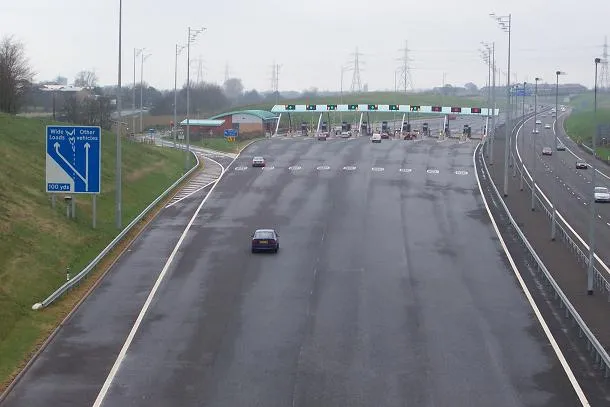
Photo: Adrian Bailey, CC BY-SA 2.0, via Wikimedia Commons
There is a particular kind of UK night driving that feels like an Autechre remix already: the M6 after midnight, roadworks glowing orange, a contraflow narrowing to one lane, and the cat’s eyes ticking past like a sequencer you cannot switch off. The question for Sublimit readers is not whether Autechre suits motorway driving. It is which parts of the catalogue keep you sharp, which parts make the dashboard blur, and which parts should be saved for a train journey where someone else is doing the driving.
This is a listening guide, not a licence to drive while knackered. If you are yawning, pull into Keele or Stafford, buy a terrible coffee, and have a walk around the car park. Music can hold your attention for a while; it cannot replace sleep. And use the car speakers, not headphones. Headphones in a car are not illegal in the UK in every circumstance, but they are a rotten idea for obvious reasons: sirens, engine note, the lorry lane, the lot.
Why the M6 at 2am Is Not a Train Carriage
Autechre on a train is a forensic experience. The headphones seal you in, the windows are dark, and the music becomes the whole world. Tracks like Cfern or Pen Expers can feel almost claustrophobic when there is no other stimulus. In a car, the motorway provides its own noise floor: tyre roar, wind, the thump of a bridge joint, the distant whine of a van. Autechre’s mid-range detail cuts through that in a way that feels less like a bubble and more like a conversation with the road.
There is also the rhythm question. On the M6, you already have a pulse: the cats’ eyes, the broken white lines, the regular thud of expansion joints. Autechre can sit alongside that pulse rather than becoming the only pulse. That is why sparse, dry tracks work better at night than dense, hyper-detailed ones. You want the music to keep the edge on your attention, not drag it into the middle of the lane.
And then there is the low end. In a car, bass is felt through the seat and the floor. Autechre’s sub-bass can be a useful physical reminder that you are awake, but too much of it on a cold night can also be exhausting. Keep the volume below the point where you are leaning forward to catch a hi-hat. If you find yourself turning up Parhelic Triangle to hear what is happening in the rear speakers, you have missed the point and possibly your exit.
The Ranking: From ‘Window Down’ to ‘Find a Travelodge’
1. Rsdio (Tri Repetae, 1995)
The best night-driving Autechre track is not the most obvious one. Rsdio is dry, clipped and restless, with percussion that feels like it is checking its mirrors. It gives you something to follow without demanding that you solve it. On an empty stretch between Corley and Stafford, it is the audio equivalent of a passenger who stays awake and does not tell you their dreams.
2. Drane (Anti EP, 1994)
Drane is long, patient and strangely level-headed. It is perfect for average speed cameras and endless 50mph contraflows because it does not rush you. The pulse is steady enough to match the road but odd enough to keep you from drifting into motorway hypnosis. If the M6 has decided to close two lanes for no visible reason, Drane is the correct response. Do not fight the roadworks. Let them happen.
3. Parhelic Triangle (Confield, 2001)
This one is high on the list because it is genuinely unsettling in a way that keeps the eyes moving. The textures are wrong, the rhythm is uneasy, and the whole thing feels like a service station after 2am when the lights are too bright and the fridge cabinet is humming. Use it on a clear stretch with light traffic. Do not use it in fog, and definitely do not use it if you are already edgy about the spray from lorries.
4. Leterel (Chiastic Slide, 1997)
Leterel is warm and rolling, which is both its strength and its risk. It suits the long, gentle curves of the M6 through Cheshire and Lancashire, where the road seems to breathe. But warmth can tip into cosiness, and cosiness is the enemy at 2am. Keep the window cracked. If you start thinking about how nice it would be to close your eyes for just a second, skip to Rsdio immediately.
5. Surripere (Draft 7.30, 2003)
Surripere is a long-form piece that rewards attention, which makes it a tricky motorway companion. On a quiet run it is superb: detailed, shifting, full of small events that keep you listening. But it is also the track most likely to make you forget you are driving rather than listening. Use it when you are fresh and the road is straightforward. Do not use it when you are already tired and looking for a reason to miss the Keele exit.
6. M62 (Anti EP, 1994)
The obvious choice, and that is the problem. M62 is a lovely, sparse piece with a motorway name, but its emptiness can lull. It works early in the journey, before the fatigue sets in, or as a palate cleanser after something busier. It is not the track to carry you through the last hour. It is the track to play while you are still pretending the drive is an adventure rather than a chore.
7. Ipacial Section (Untilted, 2005)
Ipacial Section is busy, jittery and full of small decisions. That can be brilliant for alertness, but it can also steal attention at exactly the wrong moment. Save it for daylight or for a passenger who likes to talk over the top of things. At 2am, with rain on the windscreen and a lorry throwing spray across the middle lane, it is a bit too much like having a second road user in the car with you.
8. Pen Expers (Confield, 2001)
Pen Expers is a masterpiece and a terrible idea for tired night driving. It is intense, sharp and physically involving, which is exactly why it should be kept for a moment when you are fully awake. If you put it on at 3am and find yourself gripping the wheel during the opening minutes, that is not alertness. That is stress. Pull over. Have a break. The track will still be there in the morning.
Service-Station Folklore and the Art of the Sensible Skip
The UK motorway at night has its own folklore: the mysterious warmth of a Watford Gap pasty, the empty tables at Tebay, the way every service station seems to smell of cleaning fluid and fried food at the same time. Autechre fits that world because it is full of small, ordinary strangeness. A track can feel like a corridor, a fridge hum, a door closing somewhere behind you.
But the ranking only works if you are willing to skip. A good motorway playlist is not a test of endurance. If a track starts to blur the cat’s eyes, change it. If you cannot remember the last three junctions, stop. Autechre’s catalogue is deep enough that you can afford to be sensible. The M6 is not going anywhere. Unfortunately.