Bars, Unions and Basement Stairs: A 2026 Walk Through Autechre’s First Rooms
Autechre’s early gig history is not a clean ledger. It is a scatter of flyers, half-remembered bills, student-union listings and the kind of fan testimony that gets firmer with each retelling. So let’s be clear from the start: this is not a court record. It is a route through rooms that recur in the story of the group’s late-1980s and 1990s emergence — the student unions, basement clubs and arts-centre overspill of the north — and a look at what those addresses are in 2026. The records do not need the rooms. But the rooms do explain why the records sound like they do.
Oxford Road first: the student union
Start where the soft infrastructure was. Manchester’s student unions were the unpaid support network of early electronic live music: cheap rooms, forgiving bookers, a PA that had seen worse. The University of Manchester Students’ Union on Oxford Road is still a working union, still humming with the same aggressive carpet and low ceilings, though the building has been refurbished enough times to lose the exact smell of 1991.
Pair it with Foil. Not because the track is studenty, but because Foil has that thin, crinkled surface — music made for a room with a low ceiling and a sticky floor. Standing in the union today, you do not hear ghosts. You hear a scale. The records were built for spaces this size: not cathedrals, not warehouses, just rooms with a bar at one end and a fire exit at the other.
Whitworth Street West: the Haçienda
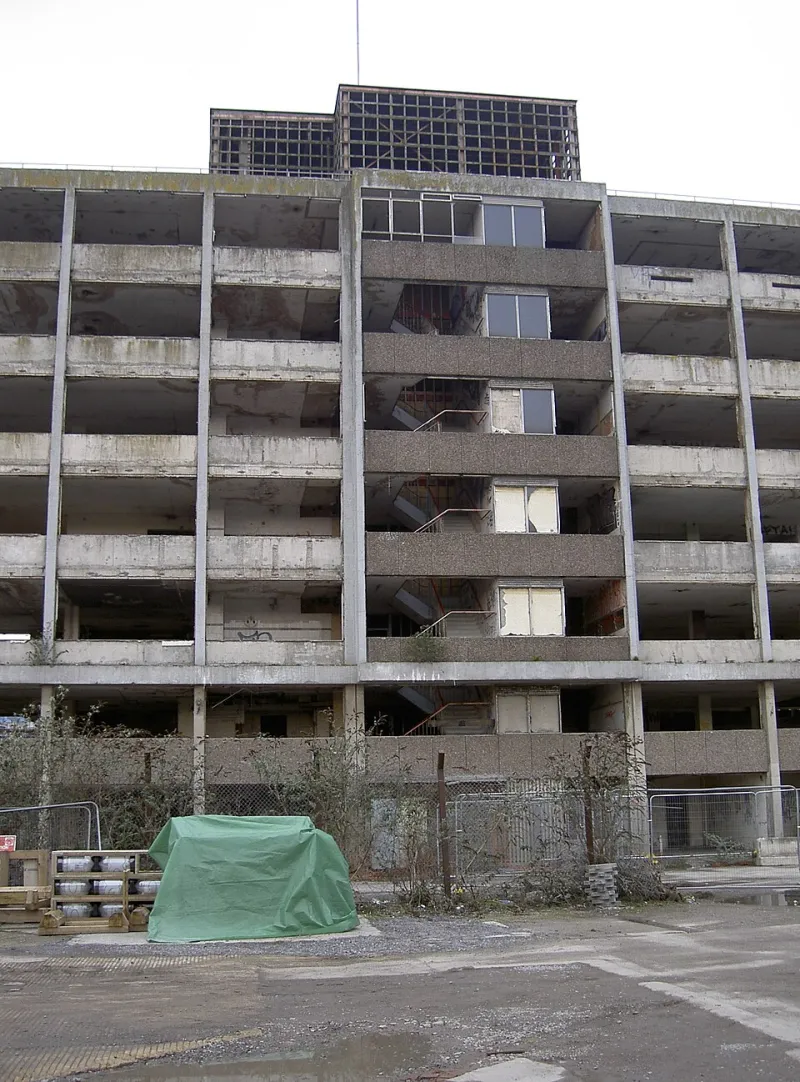
The Haçienda is the one everyone asks about. The paper trail for Autechre there is thin, and the fan accounts get fuzzy around the edges, but the room’s shadow is long enough that any early Manchester electronic act gets pulled into it eventually. The address — 11-13 Whitworth Street West — is now the Haçienda Apartments. The name is on the gate, the balconies are expensive, and the bassbin is long gone.
Pair it with Bike. Early Autechre has a gawky, playful quality, and Bike is the sound of a group working out what a room can do rather than what a record should be. Visiting the apartments adds almost nothing acoustically. But it does remind you that the Haçienda was not a temple; it was a property. The same is true of every room on this list.
Little Peter Street: The Boardwalk
The Boardwalk was a basement club off Oxford Road, the kind of place where the doors were heavy and the ceiling was low and the night felt longer than it was. In 2026 the address has been redeveloped; the basement is not a venue, and the street is quieter than the flyers suggest. That is the ordinary afterlife of a club: offices, flats, a bin store with a nice new door.
Pair it with Egg. It is a track that feels like a room within a room — a smaller, stranger space tucked inside the one you thought you were in. The Boardwalk’s afterlife is a lesson in scale: the records are not diminished by the loss of the room. If anything, they become the room. You put them on and the basement comes back, but only at the volume you choose.
Newton Street: The Roadhouse
The Roadhouse on Newton Street was a corridor as much as a club, a long thin room where the bar was a bottleneck and the stage was basically a corner. It closed years ago; the unit has been through the usual Manchester churn of signage and refit. In 2026 it is not a music venue, and there is no plaque.
Pair it with Flutter. The track’s rhythmic instability suits a room where you could never quite get a clear line of sight. The Roadhouse is useful precisely because it resists romance. Not every early room was legendary. Some were just awkward. Visiting the address is a reminder that the scene was made of awkward rooms, badly served by their own floor plans.
Leeds: The Warehouse
Head east and the trail gets colder but the architecture gets more honest. The Warehouse in Leeds — the Somers Street address that turns up in lists of early northern electronic bills — is the kind of space that makes sense of Autechre’s harder edges. The area around it has been rebuilt in the years since, and the venue itself is part of the city’s clubbing history rather than its current listings.
Pair it with C/Pach. It is all pressure and narrow geometry, music for a room with brick and a low ceiling and no soft furnishings. The Leeds leg of the trip is the one that feels most like a pilgrimage, because there is less to see. You stand on a street that has been redeveloped and you listen to a track that has not. The contrast is the point.
Sheffield: The Leadmill
Finish at the Leadmill on Leadmill Road. It is still a venue, still under the usual existential threat that hangs over every mid-sized UK music room, still worth buying a ticket for rather than just photographing the front. Early Autechre on a Sheffield bill is not the best-documented night of their career, but the Leadmill belongs on the route because it is the one address where the room and the record can still meet in the present tense.
Pair it with Eutow. It is warm, propulsive and slightly melancholy — a track that sounds like the last train home from a city you have decided to like. Standing in the Leadmill in 2026, you are not reconstructing 1992. You are in a working room, watching a working room do its job. That is more useful than a plaque.
Does the pilgrimage add anything?
A little. Not in the way a cathedral visit adds to a prayer. The addresses do not unlock hidden frequencies in Incunabula or Amber. But they do restore a sense of scale. These records were made by people who played student unions and basement clubs, who loaded gear through fire doors and waited for the last bus. The rooms were not glamorous. The music is not glamorous either, not really. It is precise, awkward and built for the back of a room.
If you do the route, do it by train: Oxford Road to Leeds, Leeds to Sheffield, and a long walk back to wherever you are staying. Take one pair of headphones and no expectations. The rooms are mostly gone. The records are still doing the work.